Wednesday, June 29, 2011

Becoming a Crusader

It’s not uncommon for people to want to do something to give back to society or to make a difference in the lives of others when they have been through a significant loss.  However, timing is very important with this. If the person has not adequately mourned their loss and worked through the grief journey then taking on the role of crusader and a significant cause is really about avoiding the pain they are living with.
I remember after surviving multiple deaths in our family when I began thinking that I wanted to do something to help others. It became quite an obsession for me.  That’s all I wanted to do was think of ways in which I could make a difference. Fortunately, none of those ideas panned out in the way I planned. I say “fortunately” because the delay forced me to work through the process and resolve my grief first.
It was nearly five years after my husband’s death before my first book was published. On one hand, it seemed to take ‘forever’ for me to get anything written and published. On the other hand, once it came out, it really felt like the time that had passed was merely a blip.
Twenty years later, I am working every day to make the difference in the lives of those who have suffered a loss through death and/or catastrophic injury. I am passionate about what I do and why I do it. I have worked through my feelings of grief and I know that what I do honours those who were an important part of my life and have now passed to the other side. My work today is truly about helping others on their journey and no longer about me looking for meaningful ways to escape the pain.
As I have mentioned so many times before, you cannot escape grief. If you desire to help others and make a difference in this world using the experience you have, then commit to doing the work of healing yourself first. If you don’t, the grips of grief will continue to snatch you at every opportunity and interfere with your ability to be present to the suffering of others.  Remember the saying… “Physician heal thyself” and trust that when the timing is right, you will have your opportunity to shine!
Photo Credit:
renjith krishnan
http://www.freedigitalphotos.net/images/view_photog.php?photogid=721

Monday, June 27, 2011

Professional Counselling – Is it for everyone?

Over the years I have met people who have attended counselling for years.  Some are still working through some deep issues. For others, it has become a lifestyle. Then there are those who would benefit tremendously from working with a counsellor and have either never considered seeing one or simply refuse.
Here are my thoughts on counselling:
·         You don’t have to sign up to be on the leather couch for twenty years. It depends on the issues that you are working through. For example, a person dealing with the aftermath of physical or sexual abuse may require extensive support. Others may need to see a counsellor for only a few sessions and then have what they need to do some work on their own.
·         Sometimes it is helpful to talk with someone who is not immersed in the pain with you. Attempting to share your feelings with family members and/or friends may be frustrating for both parties because of a lack of understanding and because that person is dealing with their own feelings about the situation. Remember ... following a loss, a family may experience the ‘family pressure cooker’ – everyone has a high need to be understood but little capacity to understand (Dr. Alan Wolfelt).
·         Counselling sessions provide you with a place to explore your feelings and thoughts in a safe, nurturing environment free of judgement.
·         The feedback you receive in counselling provides you with other options to explore or it may give you a new perspective on the situation. I often explain it to people in this way: I sit in the same chair to have my morning coffee. From that angle, everything looks the same. But if I make myself sit in another chair, the view of the room is different. The view through the window is different. And I see things that I may not have seen from the other chair – like cobwebs or smudges of fingerprints on the glass! A new perspective on the situation can help to unravel the tangled web we often feel stuck in after loss.
·         It’s important to have a connection with your counsellor. Interview a potential counsellor before committing to seeing them on a regular basis. If you don’t feel that connection then it will be difficult to do the work that you need to do.  When I am approached by a new client, I always suggest we meet first (at no charge) and get to know one another better and determine if it is a good fit for both of us.
Photo Credit: Ambro
<p><a href="http://www.freedigitalphotos.net/images/view_photog.php?photogid=1499">Image: Ambro / FreeDigitalPhotos.net</a></p>


Friday, June 24, 2011

Sharing Loss with Others

Sharing our loss with others is an important piece to the grief journey. In sharing your story, it allows you to explore your feelings and to validate the impact that a particular loss has had on your life.

People generally have good friends and close family members that they are able to share their feelings with. However, some may not feel comfortable with sharing their deepest feelings with people they know so well. And, there are those who truly have no one to walk the journey with. In all instances, a support group may be beneficial.

I don’t want to imply that EVERYONE who has suffered a loss needs or will benefit from attending a support group, so don’t rush out and sign someone you know up for one because they recently have had a loss. Support groups are an option for everyone, offering a safe, nurturing space to do the work of mourning with others who have had similar experiences.

The following points may help you to decide if you are ready for a support group and or what it takes to start a support group:

  • Are you ready? If your loss is quite recent, you may not be ready to attend a group. If the loss was sudden and unexpected, a person can be in shock for a long time… sometimes weeks or months. You have to be ready to do the work. The facilitator for the group would welcome meeting with you to help determine if the timing is right.
  • Does the group have people attending with the same kind of loss that you have experienced or is it a mix of loss history (e.g. death, divorce etc.)? If it is a mix of losses, you want to be sure that you feel a connection and that you do not feel alone or isolated.
  • Getting over your grief should not be the goal of attending a support group. Each person’s journey is unique to them. Don’t set yourself up with a specific timetable for attending (i.e. 5 sessions). Instead, commit to attending for as long as you need to get the work done… trust me, you will know when you are ready to move on.
  • Don’t feel that you have to share at every session you attend. Not everyone does. Keep in mind that the group is a safe place for you to do the work and explore your feelings, but there may be some days that you just don’t want to share and that is okay. The group should respect that.
  • Prepare to be part of someone else’s journey. A group session means that more than one person will be sharing. It’s important that you are able to give attention to the person who is speaking and not interrupt to share your experience. It’s a give and take process. Give others their time and take your turn.
  • Support groups are not for giving advice. They are for sharing experiences and to do your personal work. If a group member requests help with something, it is fine for the group to share ideas and thoughts on what may have been helpful if your loss experience is similar to theirs.
  • Judge not, lest ye be judged. Support groups must be non-judgemental. Thoughts and feelings that people experience following loss are not right or wrong. Don’t attempt to persuade or dissuade someone from feeling what they are feeling. Instead, respect where they are and listen with love.
  • You don’t need to make a life commitment to attending a support group. A support group may only run for a specific amount of time (i.e. 8 or 9 weeks) or it may be an ongoing, drop-in type of group. If it is for a specific timeframe, try to commit to attending all of the sessions. Remember that you are part of someone’s support too, so if you don’t show up, they don’t have the support either. If it is an ongoing group (or you don’t feel that you can continue) then discuss your decision with the facilitator and the group.
  • Allow yourself to ease back into life after a session. Sharing your experience and hearing the stories of others is a very demanding and taxing process. Plan to do something nice for yourself after every session. You may enjoy going for coffee with a friend or group participant after the session, or go to a favourite quiet spot to process what you heard or feel. You may prefer to go home and enjoy a bubble bath or quiet time to journal.

*Remember confidentiality is a must! What is said in the group – stays in the group. If you meet up with another group member after a session, it is fine to discuss how you or they feel. It’s not okay to discuss others in the group or what they may have said.

Photo Credit: renjith krishnan
http://www.freedigitalphotos.net/images/view_photog.php?photogid=721

Wednesday, June 22, 2011

Loss of Faith

 There are a number of ways that we can ‘lose faith.’ If someone disappoints or betrays us, we may lose faith in them. Those experiencing a significant loss may also say they have lost faith in God, the world, society-at-large or in others. This is a challenging place to be. In my humble opinion, if we have faith in ‘nothing’ then it is going to be very difficult to move forward in life. It’s not for me to determine what or who people should have faith in, but I believe that part of the healing is to reconcile the loss of faith too.
Those with a strong faith-base and connection through a church, community group, or spiritual gathering often draw upon their faith and those connections when they suffer a loss. They find comfort and strength in their beliefs. They also have a built-in network of support through friends and family who may also be a part of this community and this helps them feel safe.
Sometimes people push their faith away in protest of what has happened. You may have heard someone say, “How can a just and loving God allow something like this to happen?” Or they ask, “Why?” “Why me?” “Why us?” “Why now?” Don’t interpret these questions as a loss in faith. More often than not, they are searching for meaning… attempting to make sense of what has happened. This is common following loss.
If you are supporting a friend or family member, it’s important for you to understand that you do not have to answer the question. Instead be present for them and allow them to explore their faith. It takes time. Do not judge their questioning of God. Do not attempt to persuade or dissuade them as they explore their feelings. Just be. They will do the work if given a safe, non-judgmental space to do it in. It’s important for YOU to have faith that the bereaved will come to a place in their faith that is right for them.

Monday, June 20, 2011

Death of a Hero

On June 17, 2011, Betty Fox, mother of Terry Fox died.

I never met the Fox family; however, I remember exactly the moment that Terry Fox dipped his foot into the waters of St. John’s Newfoundland to mark the beginning of his Marathon of Hope. My family and I had recently moved to Northern British Columbia and I was parked on the side of the road when a radio announcer began giving details of this brave young man’s dream to raise money and awareness for Cancer research across the country. From that moment on, I was hooked.

I kept close tabs on his whereabouts through radio and the paper. I can’t explain what it was, but I knew he was going to do something great. When he was forced to stop his run after 143 days and 5,373 kilometres, I wept. I was sad for his family, sad for his health and sad for his unrealized dream. Over the next year, there were snippets of news here and there and I took it all in, hoping and praying as everyone was, that the doctors were wrong, that a cure would be found, or that it simply was just a bad dream.

Terry Fox died on June 28, 1981. My husband and children and I had arrived in Surrey, BC the night before to visit with my mom. I knew that Terry Fox was in Royal Columbian hospital, about 30 minutes away but honestly had not thought about him in preparation of the trip or when we got there. We went to bed and I slept soundly until 4:30 am when I woke with a terrifying start. I sat up, looked at the clock and whispered as my eyes welled in tears, “Terry’s gone.” Of course, I told myself that I must have been dreaming and to just go back to sleep. When I got up a couple of hours later, the first news I heard was that Terry died at 4:35 am that morning.

I can’t explain what my emotional/spiritual connection with him was. We were close in age, grew up in the same area, but never met. He was a hero for me. And when his mom took up the “torch” to carry on his dream, she became my hero too.

Betty Fox established the Terry Fox Foundation. Thirty years have passed since the first Terry Fox Run took place with over $550 million dollars raised in 28 countries for Cancer research. An amazing accomplishment!

To the surviving Fox family members … God bless you all and may you find comfort in knowing that Betty and Terry made an immeasurable difference in this world and changed the lives of many…including mine.

Friday, June 17, 2011

The Loss of a Father

 
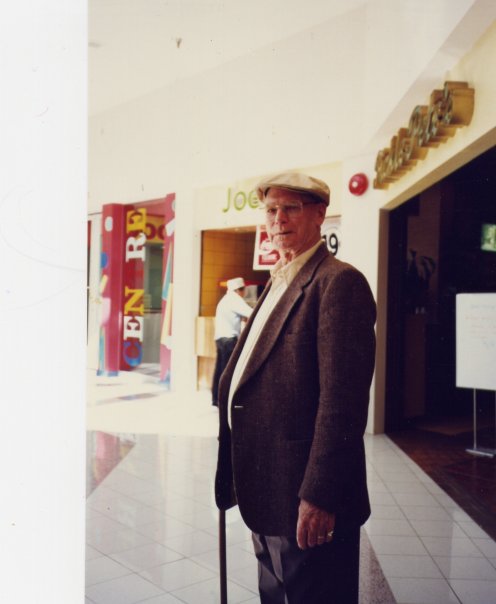
This is dedicated to my grandfather, father, brother, and to the father of my children. It’s been many  years since we held them close, but we have never forgotten them.
My Grandfather
The memories our family shares of these men are vast. Some are joyful, others are painful. The differences that any of us had with them were that… differences. There is no denying that at times those differences were outward disagreements that flared into raging blow-ups and one would wonder how the relationship could be sustained. Sometimes it took distance and time to let things settle and to return to a sense of calm. At other times, it took work to resolve the differences. Everyone had to drop their egos and commit to seek understanding, rather than demanding to be understood. It wasn’t easy; however, it was worth it. I had a good relationship with all of them and when they died… I had no regrets.

My dad

They were not perfect. They had flaws and issues in life, as we all do. Regardless of how those imperfections manifested, the one perfection they shared was that they were proud to be fathers and they loved their children. There is no second guessing that.
To hear this beautiful song, visit YouTube and search for John McDermott.


The Old Man   ~Phil Coulter

My brother, Brian

Gerry, my children's father

The tears have all been shed now
We've said our last good-byes
His soul's been blessed
He's laid to rest
And it's now I feel alone
He was more than just a father
A teacher, my best friend
He can still be heard
In the tunes we shared
When we play them on our own

I never will forget him
For he made me what I am
Though he may be gone
Memories linger on
And I miss him, the old man

As a boy, he'd take me walking
By mountain field and stream
And he showed me things
Not known to kings
And secret between him and me
Like the colors of the pheasant
As he rises in the dawn
And how to fish and make a wish
Beside the holly tree

I never will forget him
For he made me what I am
Though he may be gone
Memories linger on
And I miss him, the old man

I thought he'd live forever
He seemed so big and strong
But the minutes fly
And the years roll by
For a father and a son
And suddenly, when it happened
There was so much left unsaid
No second chance
To tell him thanks
For everything he's done

I never will forget him
For he made me what I am
Though he may be gone
Memories linger on
And I miss him, the
old man.


Wednesday, June 15, 2011

The Loss of Joy

Precious babies and newborn animals bring joy to so many. Painting, photography, sculpting, gardening, mountain climbing and cooking are also ways that people experience joy. When you suffer a loss and it snuffs the joy out of your life, it’s difficult to put a smile on your face.
Death, divorce, and other painful transitions, including the ending of a relationship with a parent, sibling, child or friend are experiences that may leave one feeling abandoned, rejected, and unloved. Any one of these losses or endings takes time to reconcile and it is in the reconciling that we can begin to connect with joy again.
Here are some suggestions to help you reconnect with joy:
  1. Watch a funny movie or television show – no greater story than that of Patch Adams, a doctor who infused humour into his work with gravely ill children, demonstrates how laughter can lighten the burden on your heart. It’s okay to laugh after loss. You are not being disrespectful and it actually has positive benefits for your health.
  2. Take time to smell the flowers – I know that sounds very cliché, but it really is about allowing yourself to just stop, breath and take in the beauty around you. Look at the magnificence of this world and take in its wonder and know you are part of the beauty that abounds.
  3. Go out of your way to help someone else – this too may sound simplistic, but it works. Visit the elderly, listen to their stories, and watch the joy in their faces as you take interest. It will lighten your mood and both of you will part feeling that you matter.
  4. Play like a kid – all of us know someone who has a child or children that we can spend time with if we don’t have our own. Children live in the moment. They find great joy in seeking out small bugs, chasing garden snakes, finger painting, skipping through mud puddles or having a story read to them. Be a kid for day with them… I guarantee you will have a new perspective.
  5. Allow the joy into your life – this is a hard one, but the most necessary. We have to allow the experience of joy back into our life again. Pick up the camera, the paintbrush or your old guitar… just allow yourself to feel the happiness  that the gifts you have can bring to you and others.
  6. Start loving yourself today and purposefully smile in the mirror. Someone will be smiling back at you.